If your training video is the least part of your team’s favorite today or only other negligent manuals, it’s time to rethink your strategy. Make a really video teaching and holding back attention easier than you think.
Let’s explore how to make a functioning training video and don’t make your coworkers sleep.
Type of Training Video
Here are four types of general training videos used by businesses and educators:
1. Video tutorial
Video tutorial is a step -by -step guide designed to teach certain skills or processes. These videos break down complicated tasks into parts that can be managed, making it easier for viewers to follow and learn with their own speed. For example, software companies can create video tutorials that show users how to navigate their applications or perform key functions. Clear visuals, screen recordings, and voices are often combined to make this video effective and easy to understand.
2. Video onboarding
Video onboarding introduces new employees to your company’s culture, policy, and workflow. They are an important part of making new employees feel accepted and told from the first day. These videos usually include company history, mission statements, first team members, and hope. Onboarding videos that are made well saves time in training, provide consistency throughout the team, and create a positive first impression that can increase employee retention.
3. Safety training video
Safety training videos focus on workplace safety protocols and compliance regulations. Whether it’s handling the right emergency, or ergonomics, this video aims to keep employees safe and reduce accidents at work. These videos often include demonstrations, real life scenarios, and quizzes to strengthen learning. Making attractive and clear safety training is very important, because it directly has an impact on employee welfare and legal compliance.
4. Soft Skills Training Video
Soft skill training videos develop interpersonal skills such as communication, leadership, teamwork, and problem solving. These videos often use role games, storytelling, and real life examples to teach concepts that are more difficult to show through traditional text or lecture. Soft skills are very important to build a strong team and a positive work environment, so that interesting and connected videos can have a big impact.
How to make a training video with podcastle
Making training videos is easier than you think, especially with the All -in -one Podcastle platform that streamlins recording, editing, and exports. This is your steps to steps:
1. Record your video
Start by opening an online podcastle editor and selecting to record yourself, your screen, or both simultaneously. This tool gives you HD quality, making it good for tutorials, presentations, and more. You can record directly in your browser, no software downloads are needed!
2. Cut and adjust the clip
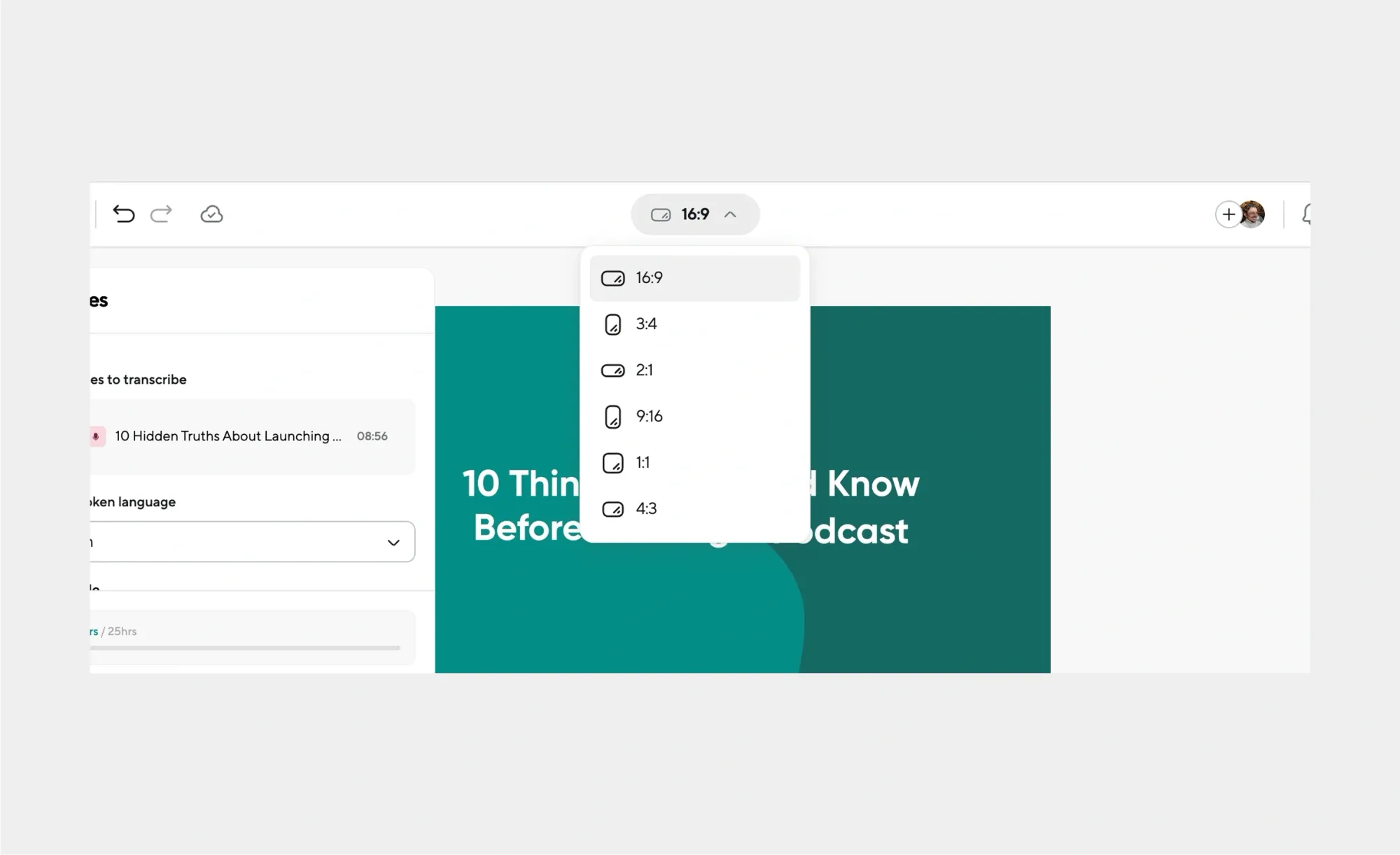
After being recorded, it’s time to move it to the intuitive timeline editor. Here you can cut, divide, change size, and combine clips easily. Podcastle makes it simple with drag-and-cop controls and snap-to guidelines that keep each editing clean and precise.
3. Increase with AI tools
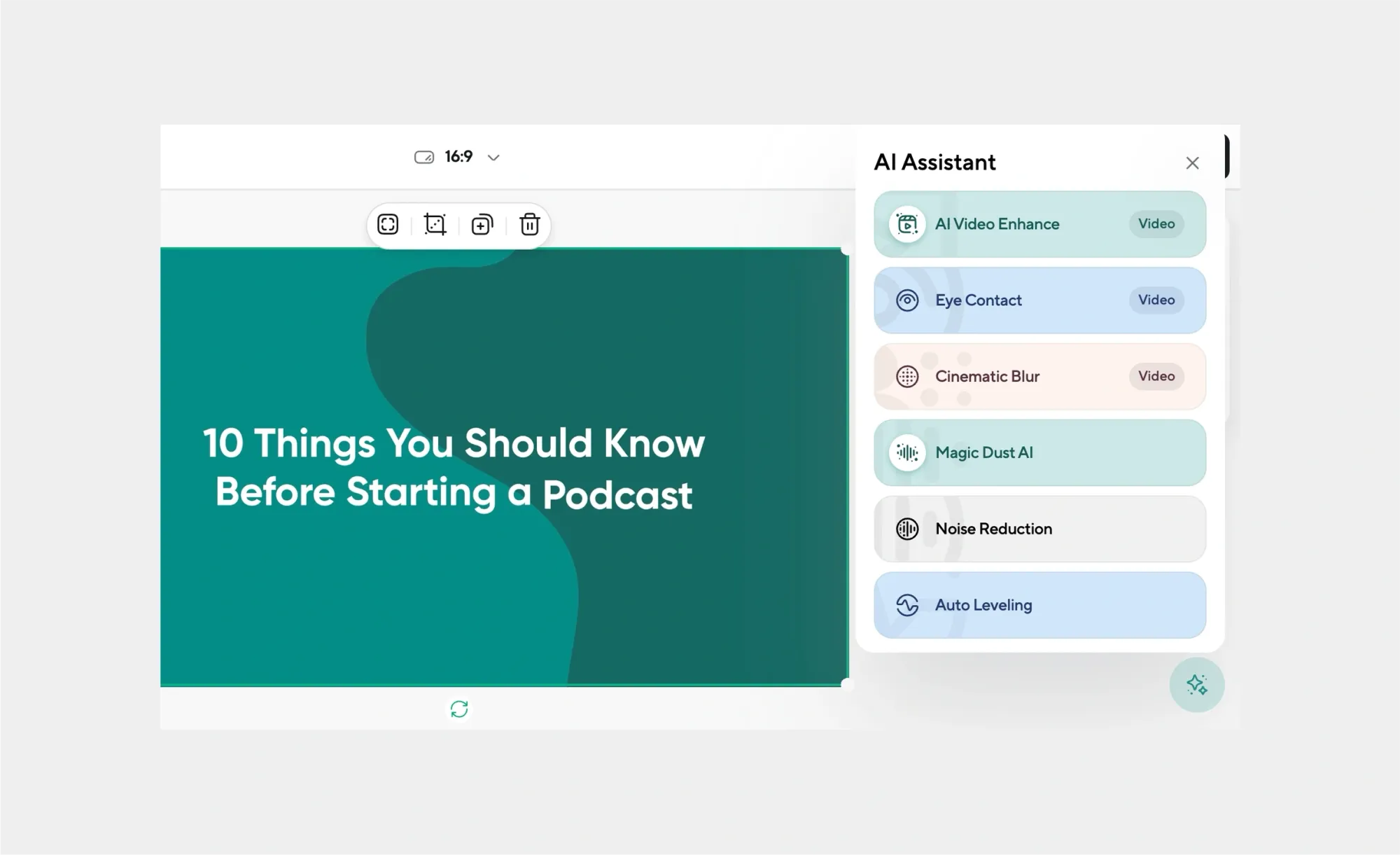
Your video polishing uses the AI Podcastle feature. Remove background noise, increase visuals, and improve audio clarity with automatic tools powered by AI. You can also easily change the ratio of your training video aspects if you need to use it again for your social media account.
4. Add text, annotation and subtitles

Strengthen important points with text, information, or call on the screen. Podcastle offers an automatic subtitle generation through accurate transcription, which can be arranged to read. You can also give annotation or highlight the screen parts to guide students smoothly.
5. Export in the right format
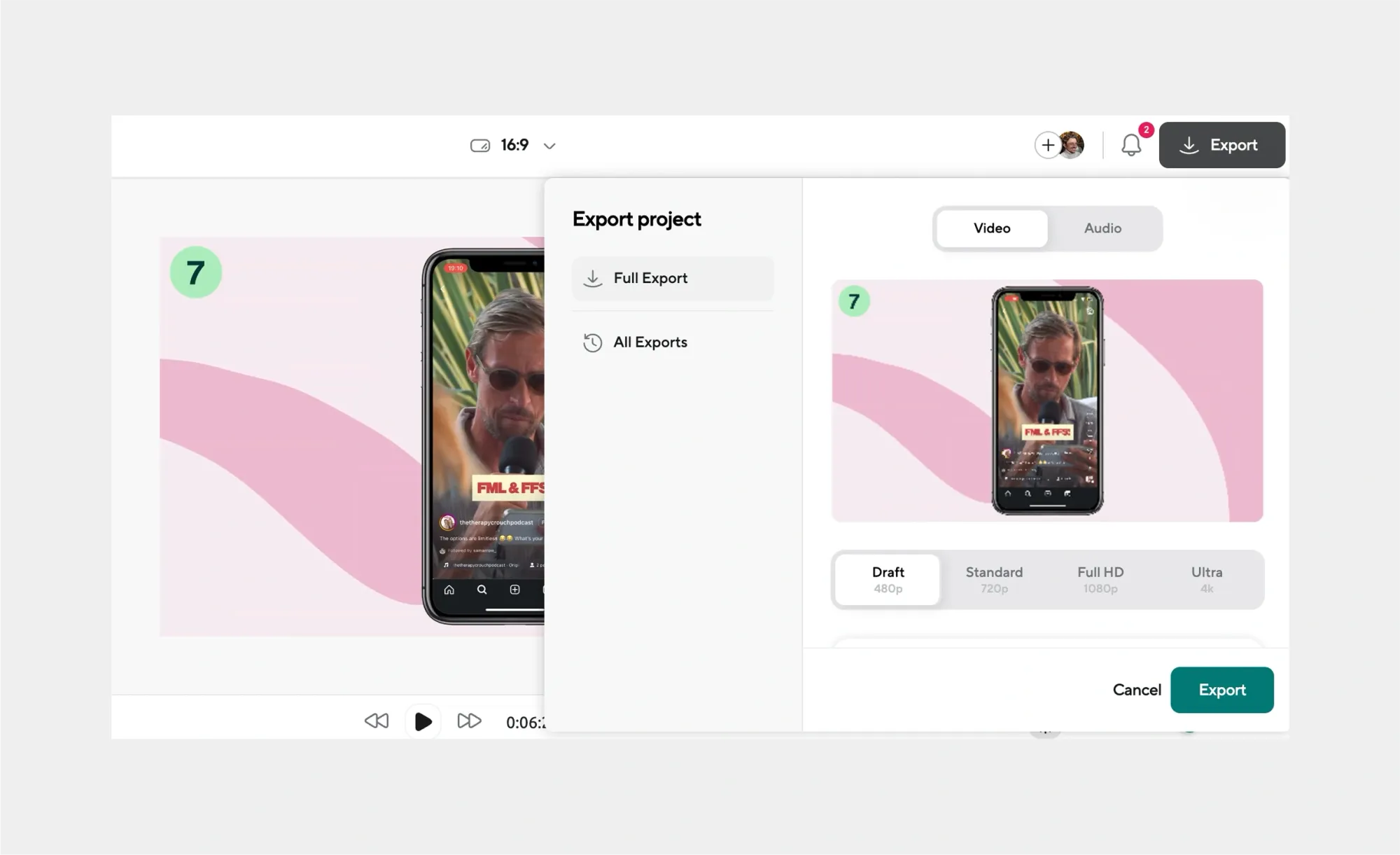
When your video is ready, select your export settings. Podcastle supports high quality formats suitable for training platforms, websites, and social media. After being exported, your polished training video is ready to be shared on any platform.
Train video production tips
Making effective training videos requires more than just pressing notes. So that your audience remains involved and helps them learn better, remember these important production tips:
- Plan your content thoroughly: Outline of your main points and arrange your video logically before shooting. A clear plan keeps your message focused and easy to follow.
- Stay concise: Aims for videos between 3 and 7 minutes. Separate longer topics into smaller segments and can be digested to maintain involvement.
- Use clear and simple language: Avoid complicated jargons or terms. Talk clearly and clearly to make your content accessed by students from all levels.
- Combining visuals and text: Add diagrams, screenshots, or text spots on the screen to strengthen important points and meet different learning styles.
- Invest in good audio quality: Use quality microphones and minimize background noise to ensure your message appears clearly.
- Add text or subtitles: Information Increasing accessibility for audience viewers and those who watch in a noisy environment.
- Include interactive elements: Use quizzes, requests, or calls to act to encourage active involvement and better information retention.
- Test and get feedback: Share your video with a small group before being released. Use their feedback to improve and clarify your content.
Benefits of Training Videos
People forget the slide and manual skim. But a good training video? It sticks. And it saves your time every time you play. Here are some of the main benefits of the training video:
1. Can be discovered and cost effective
After you make a training video, you can use it again and again without the need to repeat the session or order a coach. That means you save time, money, and human resources. Whether you are a small business or a global company, video allows you to reach hundreds or even thousands of people with a piece of content.
2. Easy to access and review
People learn in different steps, and not everyone will absorb information in one way. With training videos, students can pause, back up, and rearrange whenever they need. Whether it’s detailed steps or fast refresher, access according to demand helps increase retention and reduce confusion.
3. more interesting than manual
Just be honest. Most people do not enjoy turning -reversing solid pdf or dry onboarding deck. Video offers a more dynamic way to send content. You can use voices, music, animation, screen recording, and real people to maintain interesting things. The combination of visual and audio stimulation helps withstand attention and increase understanding.
4. A consistent message
When the training is delivered directly, even the best presenter can vary in how to explain many things. With video, you know the message is the same every time someone watching. It is important for things like compliance training or safety protocol, where accuracy is important.
5. Supports the long -distance team and hybrid
In the workplace distributed, it is not always possible to bring everyone to the same room. The training video bridges the gap. Whether your team is far, hybrid, or spread throughout the time zone, you can provide the same content without the need to coordinate the schedule or time slot.
6. Encourage independent learning
The training video gives students control over how they are involved with content. Some may speed up through basic topics, while others take the time to review complex steps. This kind of flexibility leads to better learning outcomes and experiences that are more empowering as a whole.
7. Increase retention and performance
Visual learning and hearing are combined with repetitions making information easier to remember. Studies have shown that video -based training can increase retention compared to text -based materials only. When people understand the material, they are more confident and productive in their role.
Last thought
Making effective training videos does not have to be extraordinary. With the right approaches and tools such as podcastle, you can turn dry and complicated ingredients into clear and attractive content that people actually remember. Use training videos to follow new employees, teach software skills, or build soft skills throughout your team, all while offering ways that can be discovered, consistent, and interesting to share knowledge.
Ready to start? Try today’s podcastle and make a true training video that makes an impact.
FAQ
How do you make a more interesting training video?
Keep them concise, use visuals and storytelling, add information, and include interactive elements such as quizzes or instructions to maintain attention.
How do I make a training video using AI?
AI tools such as podcastles help automate editing, add subtitles, clean audio, and even increase visuals, make the process faster and more professional.
What is the best platform for making employee training videos?
Podcastle is an all-in-one platform that allows you to record, edit, and export high-quality training videos easily. Other options include tools such as camtasia, loom, or vimeo, depending on your needs.
What is the best AI tool to translate company training videos?
Platforms such as Podcastle, Descript, and Veed provide transcription features and AI -powered translations, allowing you to make your training video accessible by global audience.
News
Berita
News Flash
Blog
Technology
Sports
Sport
Football
Tips
Finance
Berita Terkini
Berita Terbaru
Berita Kekinian
News
Berita Terkini
Olahraga
Pasang Internet Myrepublic
Jasa Import China
Jasa Import Door to Door
A gaming hub can refer to a central platform or space dedicated to gaming, where players can access games, interact with other gamers, and enjoy related content.
Comments are closed, but trackbacks and pingbacks are open.